
 By
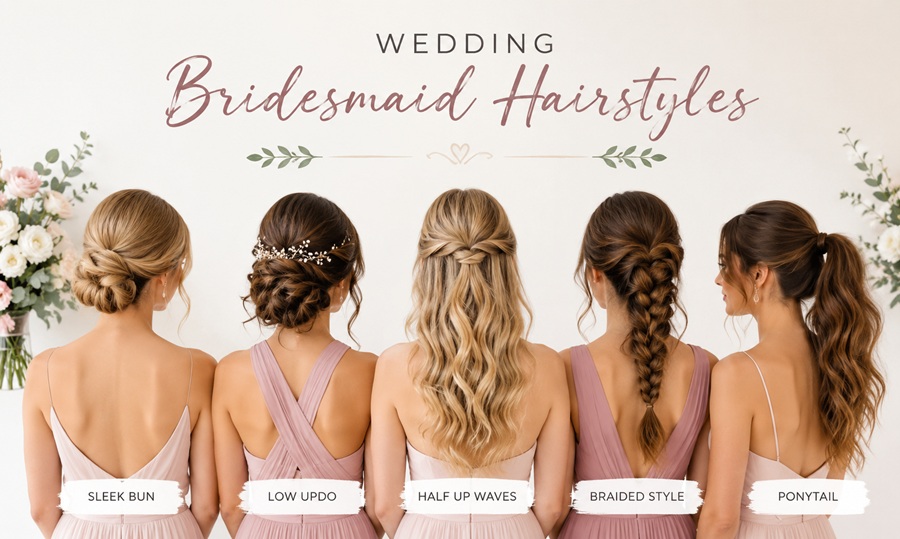
The best wedding bridesmaid hairstyles balance the wedding’s formality, the dress neckline, and each bridesmaid’s hair length and texture, rather than forcing every bridesmaid into one identical style. A coordinated look works best when it’s built around a shared element, like a similar half-up shape or a matching accessory, while leaving enough flexibility for different hair types to look their best.
Why Matching Hairstyles Isn’t Always the Right Approach
Bridal parties often assume every bridesmaid needs the exact same hairstyle, but hair length, texture, and thickness vary enough between people that one rigid style rarely looks equally good on everyone. A sleek low bun that looks polished on straight, fine hair can look flat and require far more product on thick or curly hair, and the reverse is true for loose, textured waves.
A more reliable approach is choosing a shared concept rather than an identical style. That might mean everyone wears their hair down in soft waves, everyone wears some variation of a half-up style, or everyone incorporates the same hairpin or ribbon detail. This keeps the group looking cohesive in photos without forcing a single style onto hair that isn’t suited for it.
Matching the Hairstyle to the Wedding’s Formality
The formality of the wedding is one of the first things to consider, since it narrows down which styles will feel appropriate.
- Black-tie or formal weddings – Updos, sleek low buns, and structured chignons tend to suit the dress code and photograph well under formal lighting.
- Semi-formal weddings – Half-up styles, soft romantic buns, and loose braids strike a balance between polished and relaxed.
- Casual or outdoor weddings – Down hairstyles with waves, simple braided details, or a loose low ponytail tend to hold up better in wind and heat while still looking intentional.
Outdoor and destination weddings deserve extra thought, since humidity, wind, and heat all affect how long a hairstyle holds. Styles with some texture, like waves or braids, tend to look better as the day goes on compared to a very sleek, straight style that shows flyaways more easily.
Choosing Styles Based on Dress Neckline
The bridesmaid dress neckline plays a bigger role in hairstyle choice than most people expect, since certain necklines are either flattered or overwhelmed by specific hair positions.
- Strapless or sweetheart necklines pair well with updos or half-up styles, which keep the neckline visible and balanced rather than competing with loose hair.
- High necklines or halter styles often look cleaner with hair pulled back or up, since down hairstyles can feel visually busy against a fuller neckline.
- Off-the-shoulder or one-shoulder dresses work well with a side-swept style or a low, loose bun, which echoes the asymmetry of the dress without overwhelming it.
- Deep V-necks or backless dresses are usually paired with an updo, since down hair can hide the back detail the dress is designed to show.
Hairstyle Options by Hair Length
Short hair (chin-length to just past the shoulders) Short hair has more styling options than people often assume. A textured half-up style, a sleek low ponytail, or soft curls with a decorative pin can all work well. For very short hair, a deep side part with soft waves often reads as elegant without needing length the hair doesn’t have.
Medium hair (shoulder to collarbone length) Medium-length hair works well with braided half-up styles, loose waves, or a low chignon. This length has enough hair to create volume in an updo without needing extensions, making it one of the more flexible lengths to style.
Long hair (past the shoulders) Long hair supports nearly any style, from a formal low bun to loose, cascading waves. Braided details, like a fishtail braid wrapped into an updo, tend to look especially polished on longer hair since there’s enough length to create visible texture in the braid itself.
Considering Hair Texture
Texture matters as much as length when narrowing down a style. Fine, straight hair often needs some type of texturizing product or a curling iron to hold volume in an updo, since it can otherwise look flat by the end of the day. Curly or coily hair generally holds updos and half-up styles very well, since the natural texture provides built-in volume and grip, though a stylist experienced with textured hair can help avoid over-straightening it just to fit a specific style.
Thick hair sometimes needs extra time for an updo to set properly and may need additional pins compared to fine hair, which is worth mentioning to a stylist or hairdresser ahead of the wedding day so scheduling accounts for it.
Planning the Hair Timeline for the Wedding Day
- Schedule a trial run a few weeks before the wedding, ideally with the same stylist who will do hair on the day.
- Bring the actual dress or a photo of it to the trial so the stylist can see the neckline and overall silhouette.
- Confirm timing for the wedding day, accounting for how long each bridesmaid’s style will realistically take, especially for thicker or longer hair.
- Decide on hair accessories in advance, since pins, combs, or floral pieces need to be sourced early enough to bring to the trial.
- Build in a buffer before photos are scheduled, since hair almost always takes slightly longer than expected on the actual day.
Common Mistakes to Avoid
One frequent mistake is choosing a hairstyle based only on a photo without considering the bridesmaid’s actual hair length or texture, which often leads to disappointment when the style doesn’t translate the same way. Skipping a trial run is another common issue, since it removes the chance to adjust a style before the wedding day itself. It’s also easy to underestimate weather conditions, especially for outdoor ceremonies, where humidity or wind can undo a style that looked perfect in a salon setting.
Choosing an overly complicated style for a large bridal party can also create timing problems, since more intricate updos take longer per person, which can compress the schedule for hair, makeup, and photos.
Frequently Asked Questions
Should all bridesmaids have the exact same hairstyle?
Not necessarily. A shared style concept, like all half-up or all soft waves, usually looks more cohesive across different hair types than forcing one identical style on everyone.
How far in advance should bridesmaids do a hair trial?
A few weeks before the wedding is common, which gives enough time to adjust the style if something doesn’t work as expected, without it being so early that hair length or condition changes significantly.
What hairstyles hold up best for an outdoor wedding?
Styles with texture, like waves, braids, or a slightly undone bun, tend to hold up better in wind and humidity than very sleek, straight styles.
Can bridesmaids with very different hair textures still match?
Yes, by choosing a shared style concept rather than an identical style, each bridesmaid’s stylist can adapt the same general look to suit finer, thicker, curlier, or straighter hair.
Do bridesmaids need to bring their dress to the hair trial?
Bringing the dress or at least a clear photo helps the stylist see the neckline and overall silhouette, which affects whether an updo, half-up style, or down hairstyle will look best.
How long does bridesmaid hair typically take on the wedding day?
It varies by style and hair length, with simpler down styles usually taking less time than detailed updos or braided styles, which is why confirming timing during the trial run helps the wedding day schedule stay on track.





Comments